
The Divine Unity of The Divine Mother
Perplexed by the multiple names invoked to refer to The Goddess- Devi, Chandika, Ambika, Kali, Ma Chamunda, Brahmani, Maheshwari, Kaumari, Vaishnavi, Varahi, Narasimhi, Aindri and

Perplexed by the multiple names invoked to refer to The Goddess- Devi, Chandika, Ambika, Kali, Ma Chamunda, Brahmani, Maheshwari, Kaumari, Vaishnavi, Varahi, Narasimhi, Aindri and

raktabija, who strides onto the battlefield after the death of Chanda and Munda, is none other than the citta vrttis. That raktabija is symbolic of

What do these two asuras denote? chanda means ‘fierce’ or ‘passionate’ while munda denotes a ‘shaved head’. Generally a shaved head is symbolic of vairagya

The root word ‘bha’ in the names of shumbha and nishumbha means ‘light’. However, their light is not real like the light from the

The Supreme Goddess Is The Mother of the Universe, almost identical with the Brahman of Vedanta, but only at the transcendental level. No doubt The

In The Devi Mahatmya, in the third episode the demons are more complex and subtler. This time the chief demons are Sumbha (Asmita: “I”/ “Me”,

Second Episode-mahishasuramardhini myth This is the second episode where The Adi Sakti Manifests As The Devi Durga and Overcomes mahishasura, the buffalo headed demon

The Devi Mahatmya is variously known as Sri Durga Saptashati, Sri Chandi or Saptashati It is referred to as Saptashati as it comprises of seven
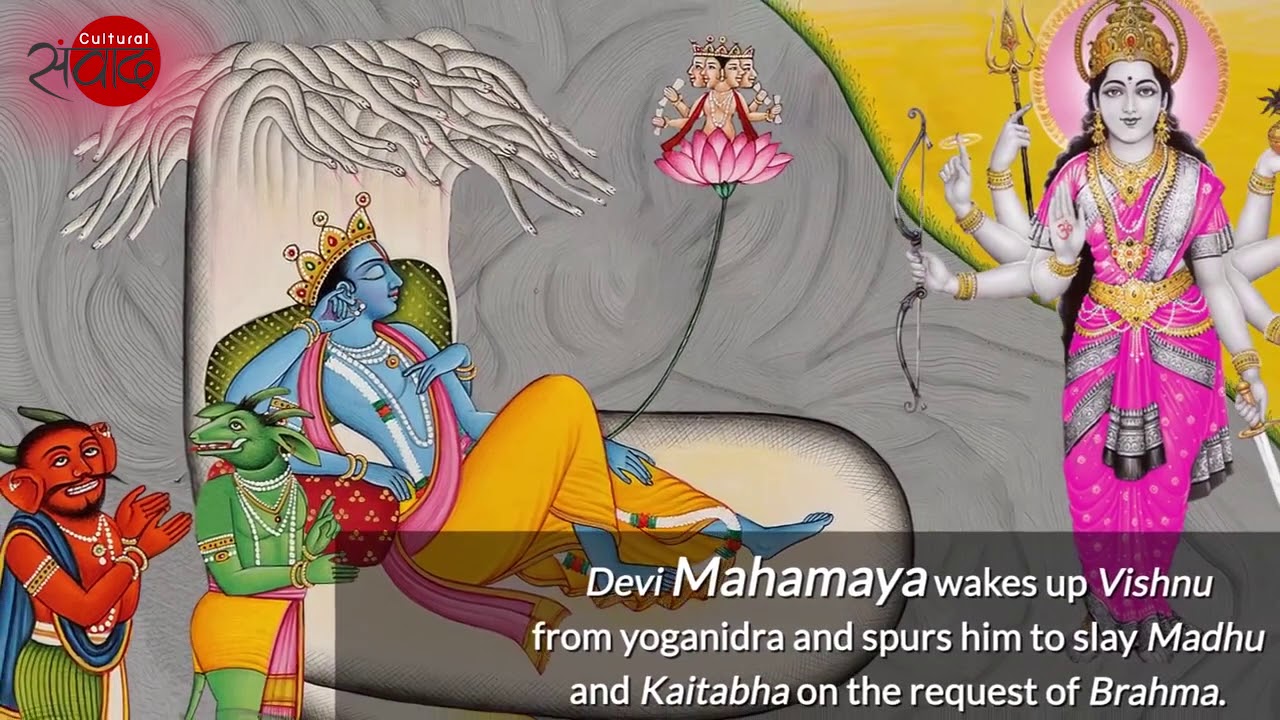
The first episode reveals the power of tamas, the power of delusion, how in ordinary state of being, humans are all deluded. The first episode

Though The Devi Mahatmya is seemingly a narrative of the battle between The Devi and the asuras, there is a deeper significance to these demons